Open hardware
ArtSwitch
ArtSwitch switches up to three relays from Art-Net, sACN or OSC. Each relay follows one DMX channel, so MadMapper, QLC+ or a lighting console can turn equipment such as smoke machines, motors or lamps on and off. Show control software such as QLab or TouchOSC can switch the relays over OSC. It is built on the WT32-ETH01, an ESP32 board with Ethernet, and is configured from its own web page.
Hardware
Relays
- Up to three relays on consecutive DMX channels, starting at a base address you choose
- 5 V relay modules; the relays are rated 10 A at 250 VAC or 30 VDC
- Separate on and off levels per relay, so a fader near the switch point does not make the relay chatter
- Optional minimum time between switches per relay, to protect motors and other loads from fast chases
- Relays keep their last state when the DMX data stops
Control
Art-Net, sACN and OSC
- Art-Net, sACN (E1.31) or both, selected per board
- Found automatically by MadMapper, QLC+ and DMX-Workshop (ArtPoll); works with broadcast and unicast Art-Net
- sACN by multicast or unicast; with several sources the one with the highest priority is followed
- The web page lists every Art-Net and sACN source it receives, with sACN source names and announced universes
- OSC addresses per board (
/name/relay/1) or for all boards at once (/artswitch/relay/1) - Relay changes can be sent back over OSC, so buttons in TouchOSC or QLab show the actual relay state
Network
Ethernet and WiFi
- Gets its address from DHCP, or assigns itself a 169.254.x.x address when connected directly to a laptop
- When the Ethernet cable is unplugged it connects to WiFi within a few seconds and keeps the same IP address and name
- Without any network it starts its own WiFi hotspot, so you can set it up from a phone
- Web page at
http://name.local - Firmware updates over the network
Build
Inside the enclosure
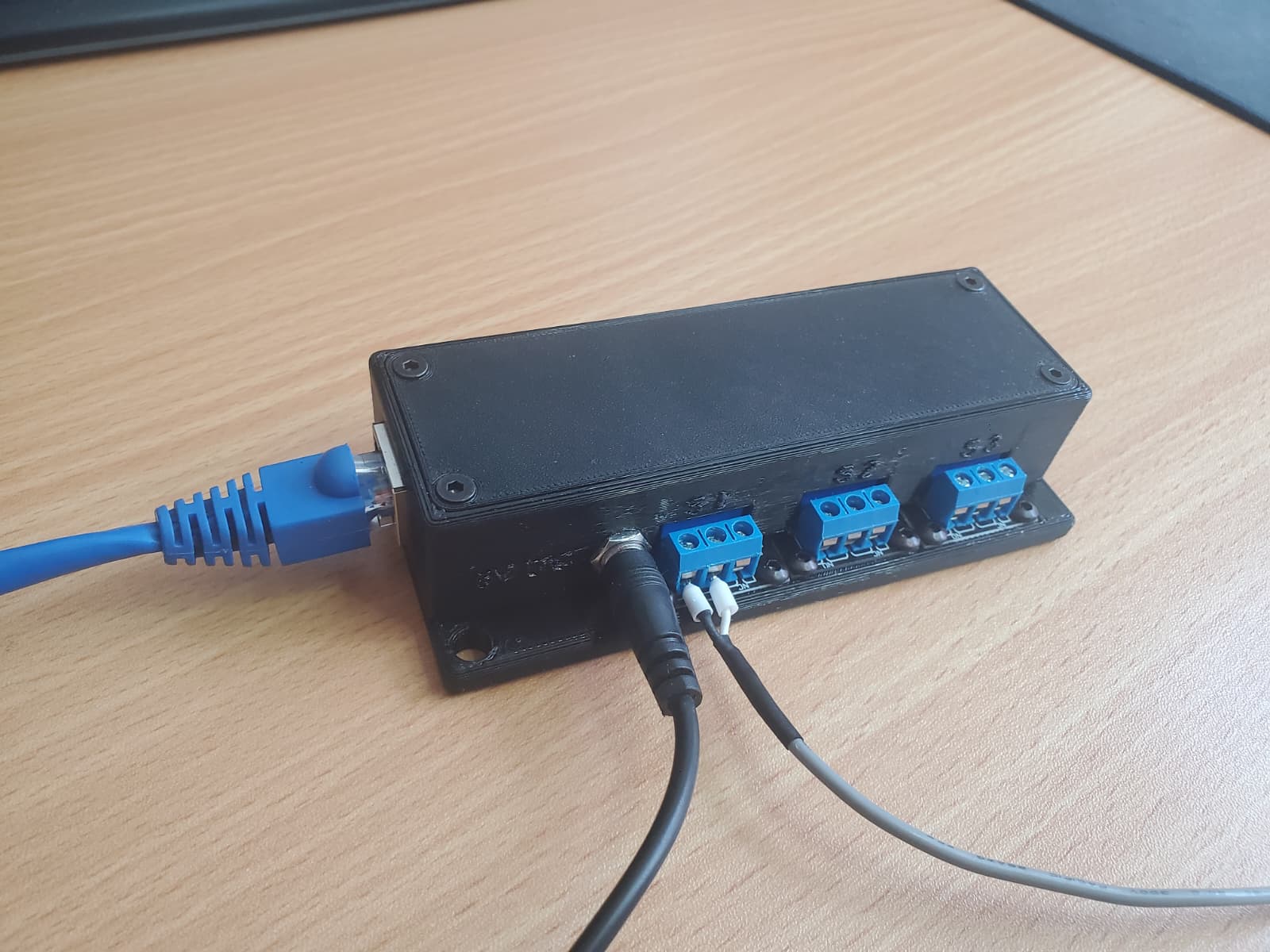
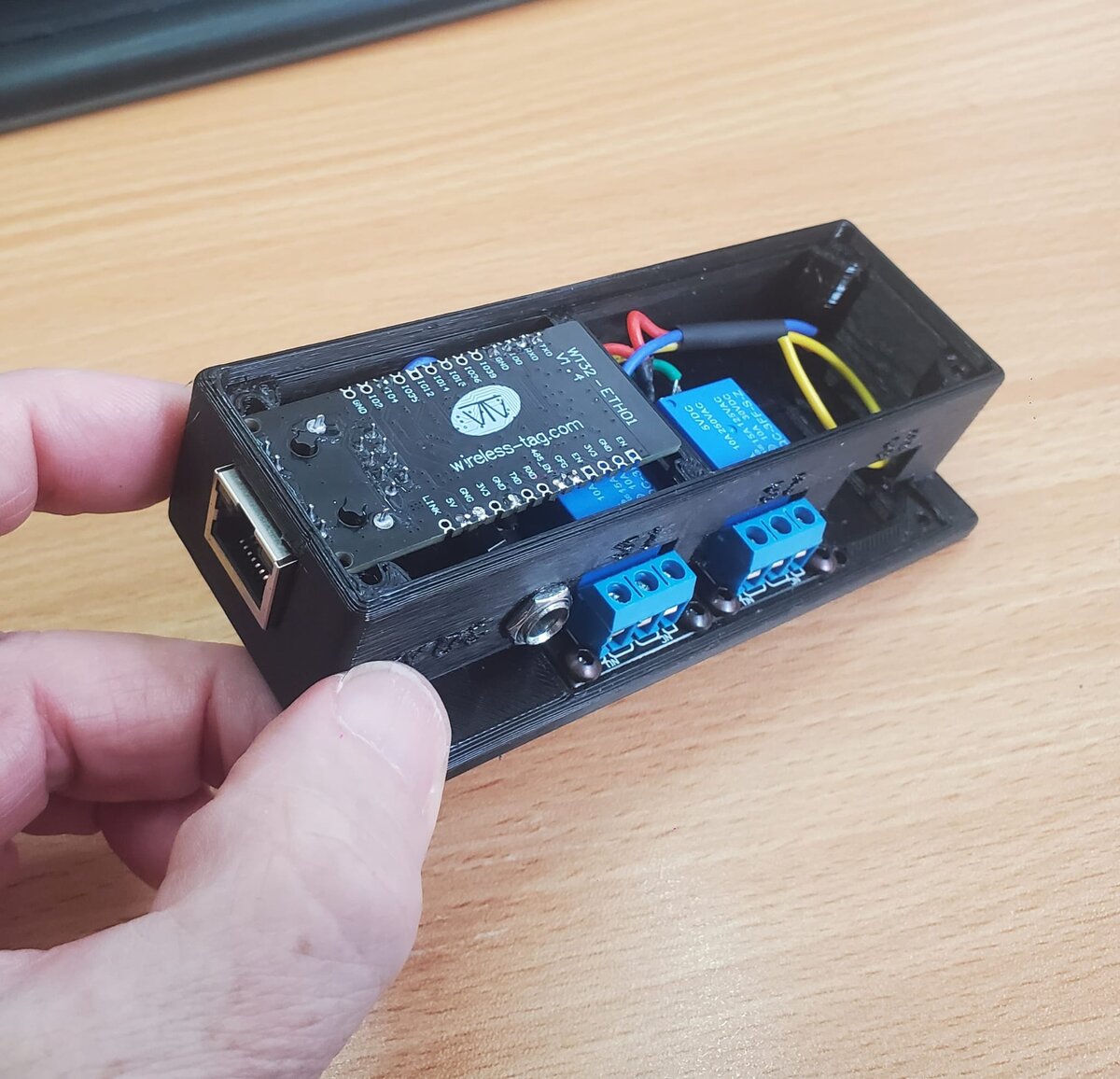
The WT32-ETH01 board is mounted above three 5 V relay modules in a 3D-printed case. The Ethernet socket is at one end. The 5 V power jack and the screw terminals for the three relays are along the side.
Configuration
Web interface
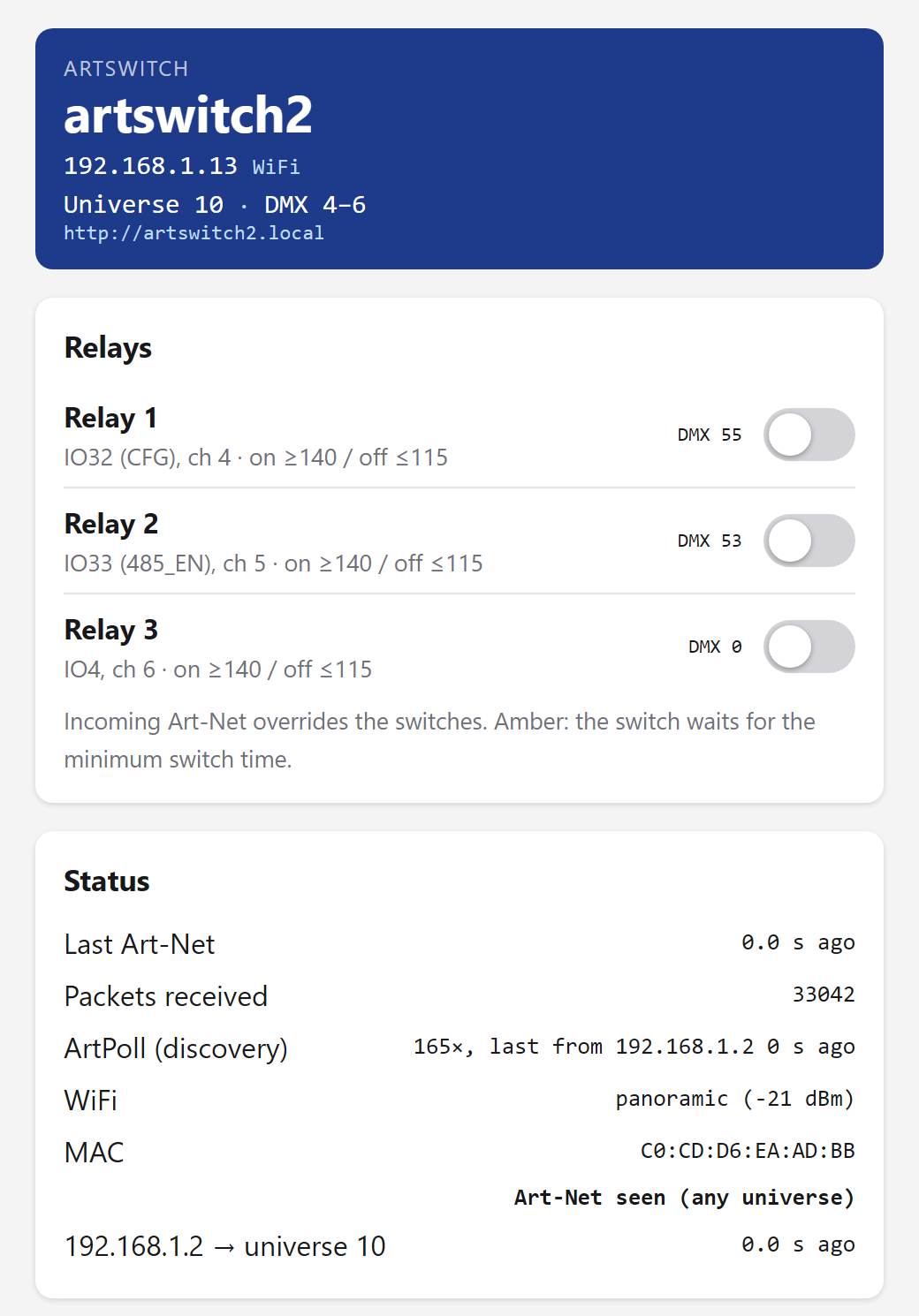
The board serves its own web page, which works in any browser. There you set the universe, the DMX address, which pins the relays are connected to, and the on and off levels for each relay. The page also shows the state of each relay, the DMX value it receives and which controllers it receives data from. Each relay has a switch so you can test it without a controller.
First to know
Register your interest
Leave your email and I'll let you know when I'm ready to build your ArtSwitch.
Want one built for you?
I can build a finished unit for you, or point you to the files and instructions to build your own.